








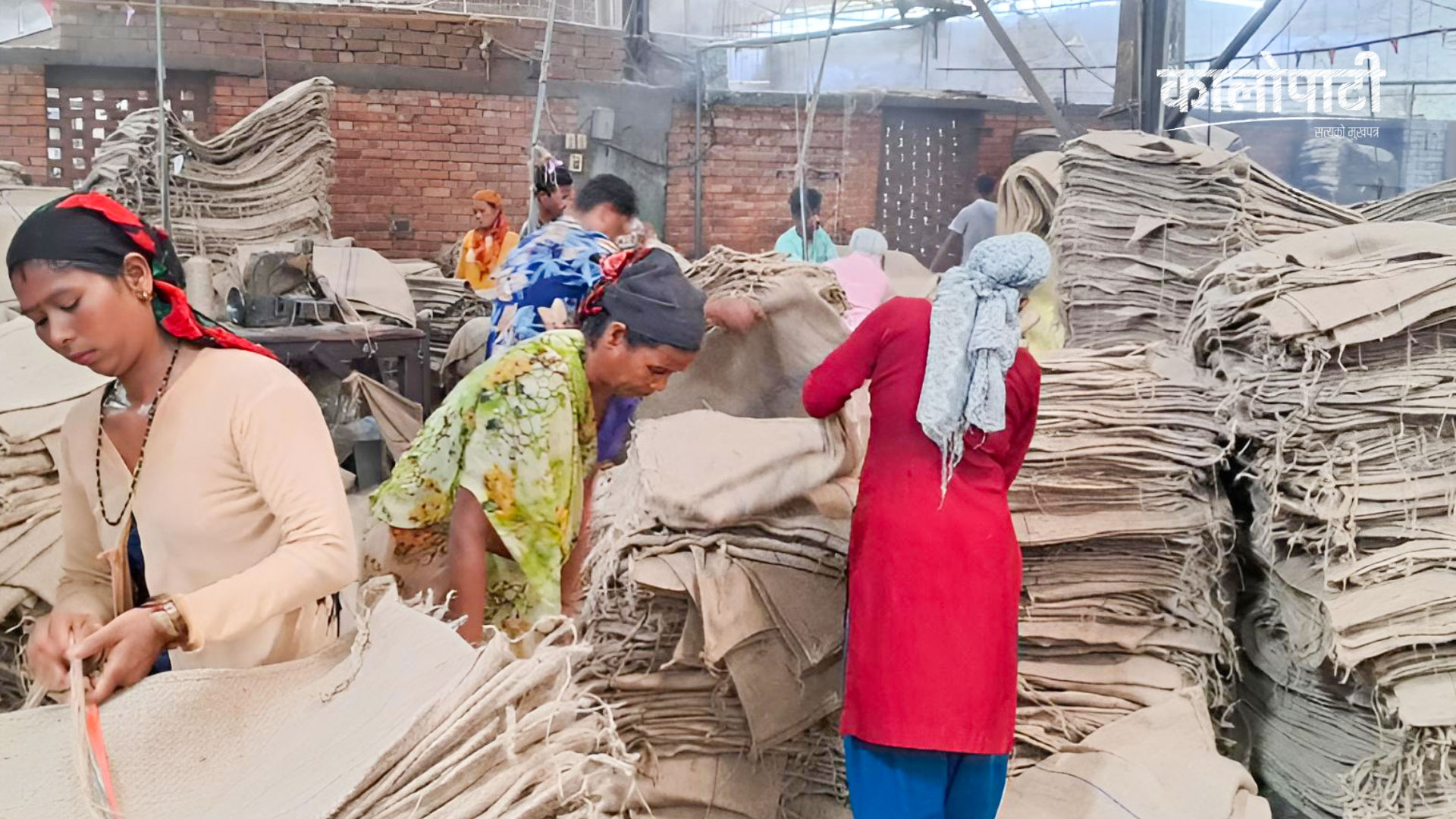

Kathmandu. Jute factories along the Sunsari-Morang Industrial Corridor have been facing crisis due to obstruction in the import of raw jute from Bangladesh. Due to the shortage of raw materials, the industries operating here have reduced production.
Most of the raw jute required for the jute industry operating in Nepal was imported from Bangladesh.TAG_OPEN_p_9 But since September, Bangladesh has made raw jute exports “conditional”. According to the Chamber of Commerce and Industry (IAI), the export process has become cumbersome due to the opposition to export raw jute within Bangladesh and the increasing domestic demand.
Govinda Bajgain of Arihant Multi Fibres Limited, the biggest jute factory located in the Sunsari-Morang corridor, said that the import of jute from Bangladesh has been stopped and it will be costlier to import jute from India.TAG_OPEN_p_8 “The price of jute is high in India and it is difficult to run the industry by importing raw materials at a high price. ”
He said that due to the shortage of raw jute, the industries have cut production twice a week, which has also caused problems to the workers working in the corridor.TAG_OPEN_p_7
There are six jute factories operating in the Sunsari-Morang Industrial Corridor employing around TAG_OPEN_p_6 12,000 workers. Around 65,000 metric tons of raw jute is required here annually. Of this, around 60 per cent is imported from Bangladesh and 15 per cent from India.
According to statistics, more than TAG_OPEN_p_5 Rs 7 billion is spent annually to import raw jute. Finished goods are made from imported raw materials and exported back to India, and Nepal exports jute goods worth more than Rs 7 billion annually. The import of jute has been hampered in recent period due to internal misunderstanding between India and Bangladesh.
Leave your comment