









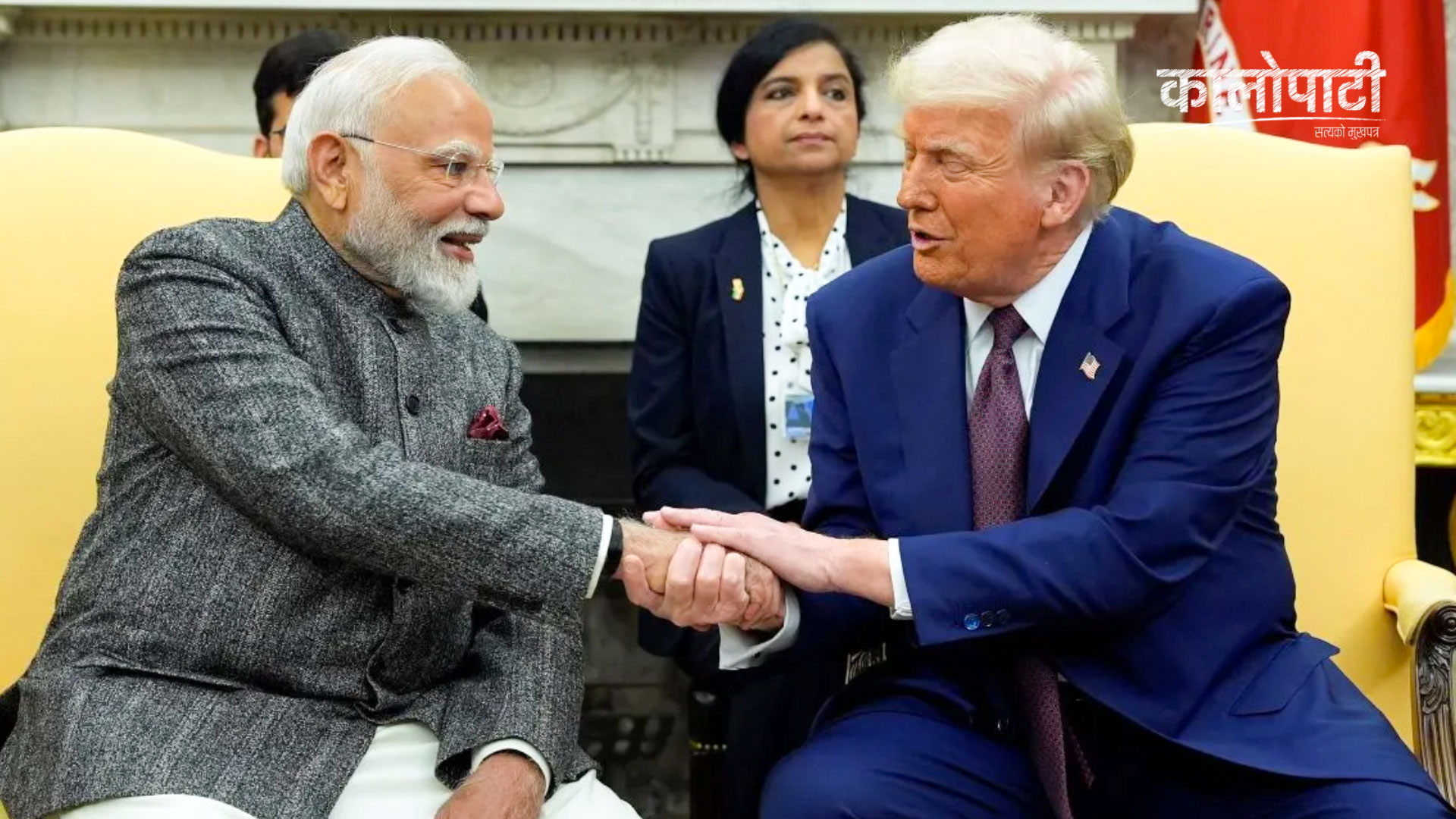

Kathmandu. The new trade pact with the United States has sparked political and economic debate within India. India’s government has been on the defensive over the deal, which has been unveiled in the shadow of Donald Trump’s sweeping tariffs policy, with critics calling it a bow down to Washington.
Formal details of the agreement, which was made public earlier this month, are limited. Except for the joint statement and the White House fact sheet, no other explicit provisions have emerged. New Delhi has said it will finalise the interim agreement by the end of March.
The agreement has particularly worried the agriculture sector. Farmers’ unions have warned that cheap U.S. agricultural imports would have a direct impact on jobs and incomes for large populations dependent on agriculture.
One of the most contentious aspects of the deal is India’s intention to buy $5 trillion worth of US goods over five years. India’s total imports from the US in the last fiscal year were about $45 billion.
According to analysts, the goal of doubling annual purchases to $100 billion does not appear to be realistic. It has been argued that even if the purchase of aircraft is made the basis, it will depend on the decision of the private airlines.
The energy sector has also become another sensitive point. The joint statement did not mention that Washington had said that India had committed to stop buying Russian oil and had withdrawn the additional tariffs. The Government of India has been of the view that the energy policy will be based on multiple-choice sources as per the national interest.
Analysts warn that a failure to strike a balance between trade, energy and diplomatic pressures could hurt future economic growth.
Leave your comment