





Kathmandu. KATHMANDU: The Chaiti Chhath festival, a great festival of folk faith and sun worship, is being celebrated in the Mithila region of Madhes Province this evening.
The four-day Chaiti Chhath festival, which began on Sunday in the Mithila region of Nepal and India, is being celebrated on the main day of the Chaiti Chhath festival.
On the occasion of the sixth day of the festival, the devotees will grind wheat and rice in a mortar, jato or dhiki and offer various sweet food items made from the flour of thekua, bhuswa, khajuria, perukia and various fruits, as well as radish, carrot, turmeric ball, bhogte, jamiri, coconut, orange, banana anglo, koniya, sarwa, dhakan, mud elephant, big dhakki and all the members of the family will reach the Chhath Ghat made near the designated water body by singing various devotional and folk songs ।
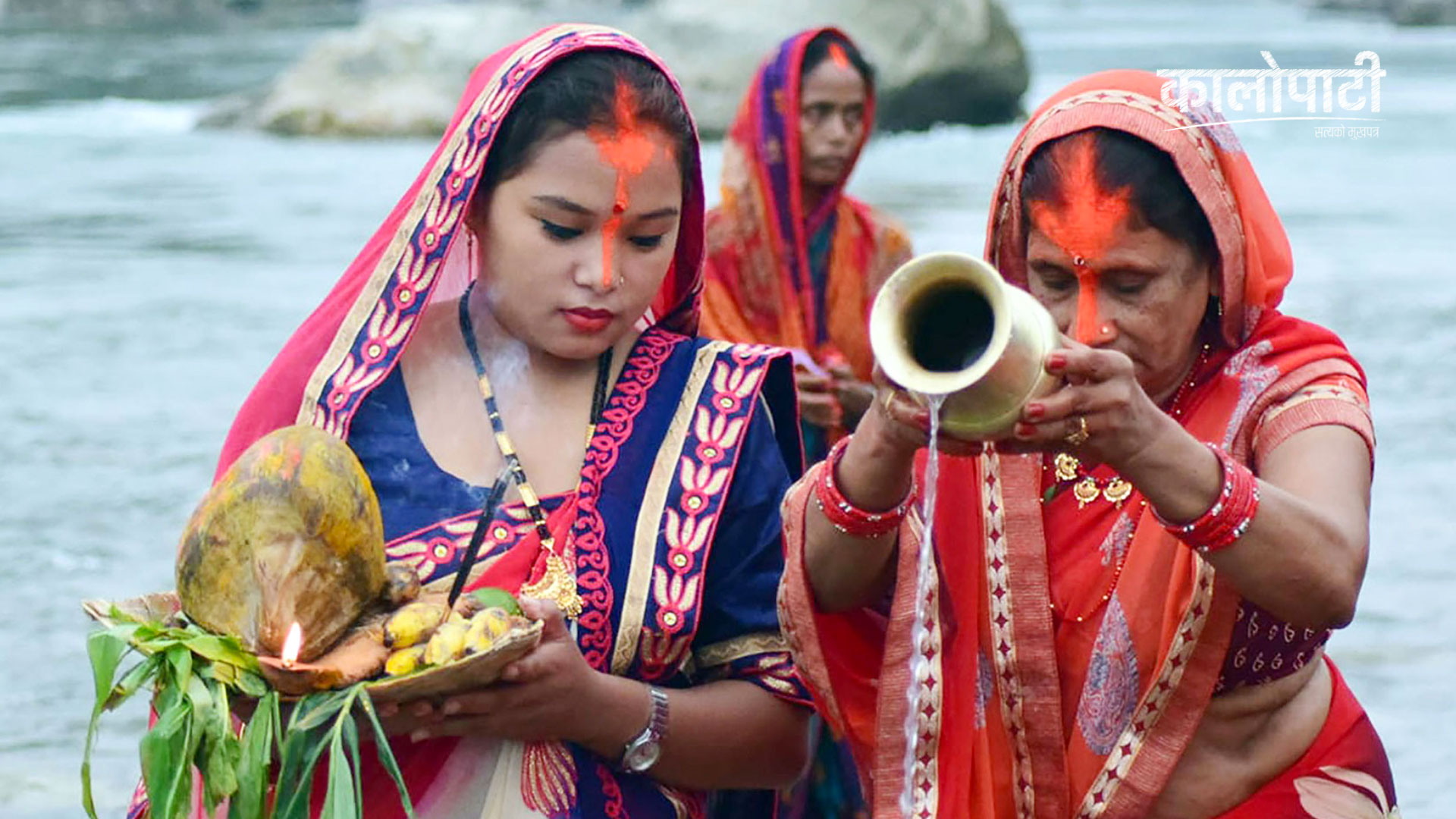
Today, in the evening of Shashthi Tithi, the devotees will enter the water for the evening Arghya, worship the setting sun till the sunset, apply flour and vermilion in both hands, put akshata flowers, take turns with all kinds of Arghya materials and offer Arghya to the setting sun.
The four-day Chaiti Chhath festival began on Sunday in the Mithilanchal region of Bihar, Tarai, Madhes and India. On the second day of the festival, the devotees celebrated the Kharna festival by worshiping their respective family deities and inviting the Sun God and Chhathi Mata for Chaitichhath Puja. Today, on the sixth day, the main worship of Chaiti Chhath is being celebrated by offering Arghya to the setting sun.
The Chaiti Chhath festival is being celebrated in the district headquarters Jaleshwor, Matihani, Gaushala, Bardibas, Aurahi, Manarasiswa, Loharpatti, Ramgopalpur, Balawa and Bhangaha municipalities, as well as ponds, lakes and ponds flowing through Pipara, Samsi, Ekdara, Sonma and Mahottari rural municipalities.
Pandit Anil Pathak of Jaleshwor-8, Mahottari said that the special feature of this festival is to increase human interest towards truth and non-violence and to encourage sympathy towards all living beings. Similarly, Kameshwor Pathak, priest of Jaleshwornath Mahadev in Jaleshwor Municipality-1, said that this is the only festival in the world in which the setting and rising sun are worshipped.
Devotees throng ponds, rivers, lakes and reservoirs on the occasion of the Chaiti Chhath festival, which is celebrated with devotion for family happiness, peace, prosperity, physical well-being, freedom from diseases and fulfillment of various wishes. On the first day of the four-day festival, the devotees performed ‘Naha Kha’, which means bathing and eating, or purifying the body.
Similarly, on the second day of the festival, Kharna was celebrated on Monday. On the day of Kharna, the devotees fasted throughout the day, worshiped the family deity by inviting the arrival of the Chhath deity at night and ate Arwa Arbain (without salt) at night. On the third day of the Chaiti Chhath festival, the main day of the Chaiti Chhath festival, all the people of Mithilanchal will celebrate Chaiti Chhath with much fanfare by offering Arghya to the setting sun.
Similarly, on the fourth and last day of the festival, the devotees will reach the Chhath Ghat again in the morning, enter the reservoir and repeat the sequence of the previous day and complete the Chaiti Chhath festival by offering Arghya to the rising sun in the morning.
According to the Mahabharata, the Pandavas, including Draupadi, worshiped the Sun God for the success of their secret stay while they were in exile. It is said that the Pandavas lived in the area of the Kirat king of Mithila. According to folklore, the tradition of celebrating Chhath started in Mithila from that time.
According to Surya Puran, Chhath fast was first observed by his wife Anusuiya. As a result, she received unwavering good fortune and love and since then the tradition of celebrating the Chhath festival has begun. Along with religious faith, the Chhath festival, which has developed as a symbol of social harmony, is celebrated by Hindus as well as Muslims.
According to Pandit Pathak, there is a belief that the number of offerings should be increased to 70 during the festival, but as there is no capacity to offer it, only rice of paddy will please the deity. The Chhath festival, which was celebrated only in the districts of the Tarai Madhes, is now being celebrated in the federal capital Kathmandu as well as in major cities like Pokhara, Narayanghat, Dharan, Itahari, among other places.
Today, on the main day of the Chaiti Chhath festival, there is a large crowd of people who do not celebrate the Chhath festival at various Chhath ghats of the country including Mithilanchal.
Leave your comment