














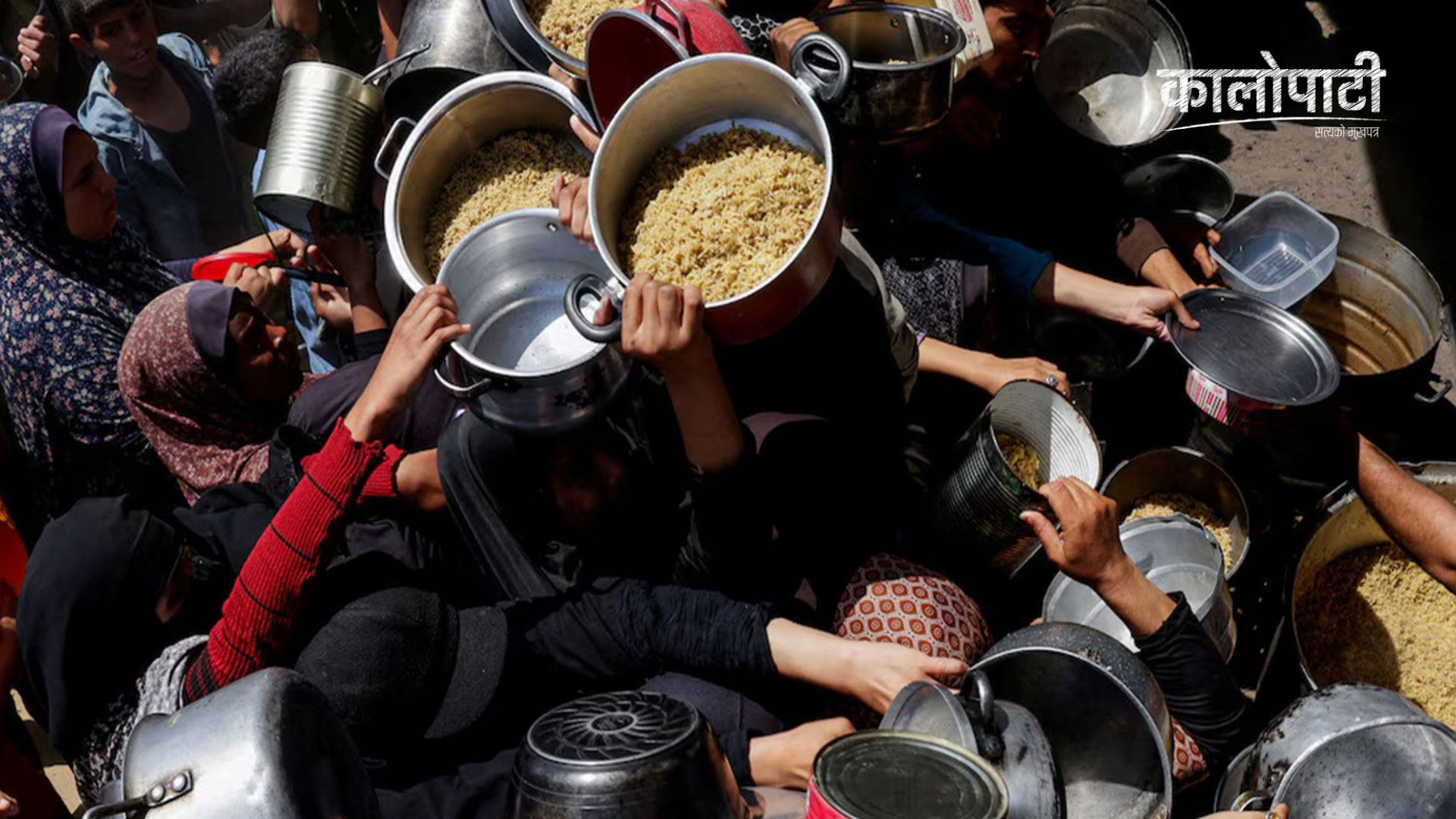

Kathmandu. Nearly 320 million people around the world are at risk of hunger due to conflict in the Middle East, according to the World Food Programme (WFP). The WFP has expressed serious concern that the ongoing conflict between the United States, Israel and Iran is raising the risk of global hunger reaching unprecedented levels.
According to the WFP, about 320 million people around the world are currently facing acute food insecurity due to the combined effects of extreme conflict and famine. In such a situation, the war in the Middle East has entered its third week and it has been warned that it is having a big impact on food and fuel prices.
At a press conference in Geneva, WFP Deputy Executive Director Karl Schau said if the war extended through June and oil prices remained above $100 a barrel, an additional 45 million people could be starving. According to him, the biggest impact of this crisis will be on the already vulnerable population.
“They are not in a position to cope with the new rise in the cost of living,” Schau said. The conflict escalated on February 28 after the US and Israel launched military action against Iran. Iran retaliated by attacking Israel and countries in the Gulf region, and Lebanon has also been plunged into conflict with the involvement of Iran-backed Hezbollah.
Currently, the WFP is distributing hot meals and bread to thousands of people in Lebanon. The organisation has appealed for an additional US$77 million to support relief efforts over the next three months.
According to the WFP, the global food crisis was already in critical condition before the current war began. Acute food insecurity has tripled in the past five years and international aid has been cut by 40 per cent last year, adding to the biggest challenge in relief efforts, Schau said.
The war has made relief efforts more expensive, with fuel prices soaring, shipping costs and supply chain delays. Transportation costs have increased by 18 percent and vehicles have to depend on expensive fuels.
The crisis threatens to affect agricultural production even in countries far from the war zone. African countries such as Somalia and Kenya have been warned that the planting season could be affected, especially as chemical fertiliser exports through the Strait of Hormuz could be disrupted. The situation in Somalia is getting worse. There are signs of famine due to two consecutive droughts. The WFP has said it has not been able to help 7 million people there due to lack of sufficient funds.
Meanwhile, food aid for famine in Sudan has been cut off, while in Afghanistan only one in four children suffering from acute malnutrition have been able to get help. “The lack of aid is killing people in Afghanistan,” Schau warned, urging the world community to provide more humanitarian aid.
Leave your comment