







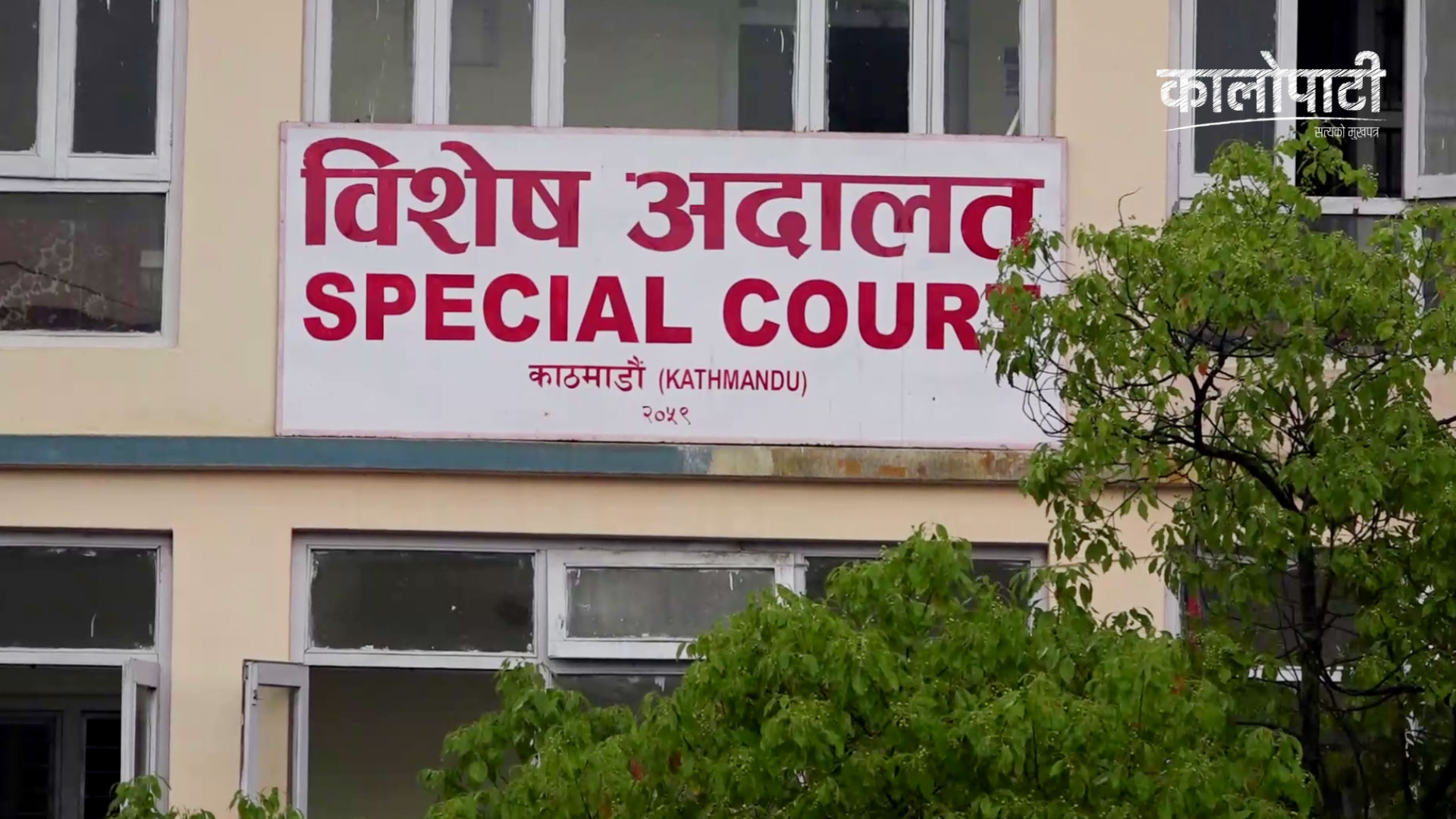

Kathmandu. A writ petition has been filed at the Supreme Court (SC) challenging the decision to make public the people arrested in course of criminal offences without being convicted by the court and to take statements under pressure.
Advocate Kumar Prasad Thapaliya filed the writ petition naming the Government of Nepal and the Nepal Police Headquarters as defendants. The court has scheduled the hearing of the petition for April 26.
The writ petition has claimed that serious anomalies have entered the present criminal justice system of Nepal. The petitioner argues that the working style of the police to prove the criminals in the society by making the name, surname, photo and video of the accused public immediately after arrest has directly violated the constitutional rights.
The writ petition has claimed that the right to live with dignity, the right to a fair trial, the right to privacy and the right against torture guaranteed by the constitution has been hurt while making the accused public immediately after his arrest. “Presenting a person arrested as a criminal in public has a long-term negative impact on their social reputation, mental state and family relationships,” the petition said.
Article 20 (5) of the constitution gives a person the right to be presumed innocent until proven guilty. However, if the police hold a press conference during the investigation, it will be a media trial and the social prestige of the person will be destroyed before the court’s verdict.
Thapaliya, the writ petitioner, has claimed that such acts are in violation of international human rights treaties, especially ICCPR and CAT. Earlier, the petitioner had filed an application with the Ministry of Home Affairs seeking reform, but no response was received.
In the petition, he has demanded a mandamus order from the Supreme Court not to make the arrested persons public until proven guilty, not to use torture during the investigation and not to use the forcible statement as evidence.
Advocate Thapaliya has stated in the writ petition that he had to approach the court as serious human rights issues were not included in the government’s 100-point agenda.
Leave your comment