















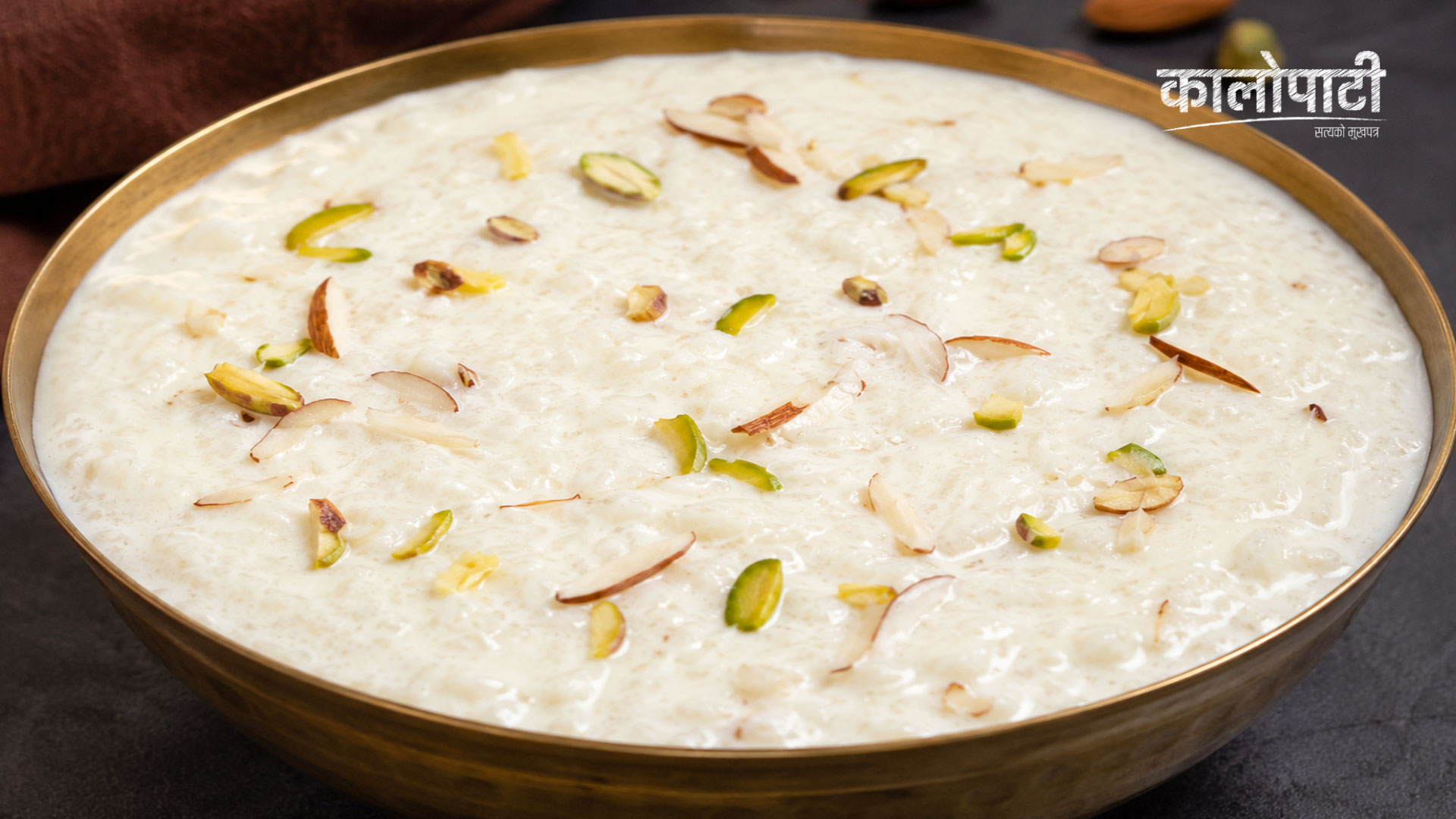

Shravan 15 falls every year. Kheer is cooked in every household in Nepal. The family gathers in the same kitchen. Greetings are exchanged. There is a lot of excitement on the faces of the children. But have you ever asked yourself if it is okay to eat kheer only on the 15th of Shravan or if there is any deep tradition or any memory hidden on this day that we have preserved for thousands of years
?
Today we will try to find the answer to this question. The history of human civilization teaches an interesting truth. Not all civilizations have preserved their memories in books. Some put it in song, some in festivals, and some in the small rituals of daily life. This is also the speciality of the eternal civilization. Here, not only the mantras of the Vedas, but also the rites of folk life have kept the spirit of the Vedas alive for generations.
Every year on the 15th of Shrawan, the Nepali society celebrates Kheer Diwasu or Kheer Diwasu. This tradition is not only for taste but is also deeply linked to health, agricultural culture and social values. Incessant rains throughout June, paddy plantation and other agricultural activities make farmers and working class physically exhausted. At this time, it is believed that a nutritious pudding made from milk, rice, ghee, sugar and dry fruits provides the body with the necessary energy, strength and nutrition. It is also believed that it helps to increase the body’s necessary heat and immunity in the cold season.
In this way, the Kheer Day of Shrawan 15 is a beautiful confluence of Nepal’s original culture, agricultural tradition and health awareness. But before understanding any tradition, one question is necessary, what is the inner soul rather than its outward form? Today, Shravan 15 should also be seen in the same way. Some people say that it is not written in the Scriptures, so it has no value. Others propagate it as a direct Vedic ritual without any evidence. But the strength of the Sanatan tradition is not in extremism, but in balance. If folk life has preserved the value and consciousness of the scriptures, then such a tradition is respectable.
Therefore, it is not enough to understand Shravan 15 as the day to eat sweet dishes. At its center is reverence for food, gratitude for nature, and humility towards life. We have to ask us why the sages gave such a big place to the grain, but the very deep sentence of the Upanishads is Annam Brahmeti. That is, food is Brahman. It means to view grain not just as something to be eaten, but as a sacred gift that sustains all life. A grain of rice on our plate is not born on its own. It has the heat of the sun, the rain of the clouds, the patience of the earth, the flow of the river, and the sweat of the farmer. Therefore, to honor the grain is to respect all creation.
The Upanishads also give another message: “Anna na condemnyate.” That is, never insult the grain. Today, we often associate fasting with not eating food. But the sages also kept respecting the grain at the same level of spiritual discipline. Because spirituality is not possible without gratitude. The tradition of eating kheer on Shravan 15 in Nepal can also be understood from this point of view. This is not a mandatory ritual. But the culture it has preserved is very valuable. It teaches us to respect the grain, to be grateful to nature, and to understand the value of a farmer’s labour. The Bhagavad-gita also expresses this truth in simple words: annad bhavanti bhutani. That is, all living beings get life from food. Life is not possible without food. This is the reason why our culture has taught us to see food as an offering, not a commodity.
Today, the facilities have increased, but the gratitude is declining. We worship the grain, but sometimes we also waste it. We wish for prosperity, but forget the value of farmers’ sweat. This is where the spirit of tradition begins to weaken.
The biggest message of Shravan 15 is not the sweetness of kheer, but the sweetness of life. The sweetness that comes from gratitude. That sweetness, which grows out of the partnership. The sweetness that is felt when the grain is taken as prasad. And that experience, which is connected to the folklore that provides the necessary energy to the tired body after planting paddy in the rainy season.
In the end, let us remember another inspirational message of the Upanishads. That is, produce, conserve and use the grain properly. This is your duty. Today, in the midst of climate change, food insecurity and increasing food waste, this message has become even more relevant. Therefore, Shravan 15 is not just a date in the calendar. It is a silent question that our civilization asks us every year whether we still consider food as Brahma, or only a commodity of consumption.
Leave your comment